
dsh-science-workbench
Agent & Workflowpoplarity/dsh-science-workbench
A reproducible science workbench plugin for DeepSeek Harness, providing agent-driven cells, inline figures with feedback and rerun, manifest provenance, and environment snapshots, along with nine bioinformatics tools and a workbench UI.
- agent
- bioinformatics
- deepseek-harness
- dsh-plugin
- jupyter
- reproducibility
- reproducible-research
- workbench
Verification and compatibility
This section shows evidence collected by the catalog. Undeclared information is labeled as unknown.
- Current-version compatibility
- Verified on the catalog Harness version
- Declared Harness range
- Not declared
- Declared platforms
- Not declared
- Profiles
- web
- Build approval
- Unknown
- Permissions
- Not declared
- External services
- Not declared
- Telemetry
- Unknown
This is not a security endorsement. Review source, permissions, and configuration before installing.
View evidence and scope
Verification covers only the named source, version, and Harness environment. It does not guarantee future compatibility.
dsh-science-workbench@0.2.0- The manifest and static structure passed checks; a runtime load check has not completed.
README
dsh-science-workbench
English | 中文



A reproducible science workbench plugin for the DeepSeek Harness. It blends the best of three worlds:
- Jupyter — cells and inline figures you can see and re-run;
- Claude Science — an agent as the execution engine;
- Nextflow / nf-core — every artifact carries full provenance.
Core promise: every figure and artifact is traceable and replayable. You can always answer “it = which code + which inputs + which environment + which params/seed”, and re-run it in one click.
✨ Features
- Code → figure → feedback → redraw — the agent runs a self-contained cell to produce figures shown inline; you attach structured feedback to a figure, and
bio_rerun_cellregenerates a derived version (v1 → v2 → v3). - One ledger per project — a plain-text
manifest.jsonis the single source of truth: cells, artifacts, provenance and feedback history. - Reproducible by construction — self-contained scripts, a fresh subprocess per cell,
environment.lock, SHA-256 input/output hashes and a fixed seed. - Git-versioned automatically — each project is
git init-ed on creation and auto-committed at every step (never pushed). - Cross-platform — the Host shell layer speaks bash on macOS/Linux and PowerShell on Windows; Python resolves to
pythonon Windows andpython3on POSIX.
🛠 Tools
Nine agent-facing tools, plus a browser workbench:
| Tool | What it does |
|---|---|
bio_init_project | Create/open a project: code/ data/ figures/ + manifest.json + environment.lock + git init. |
bio_run_cell | Run one self-contained cell, discover figures, register artifacts with hashes, commit. |
bio_rerun_cell | Re-run a cell with edited code as a derived version (lineage recorded). |
bio_add_feedback | Attach structured feedback to an artifact (this is how a “redraw it” note becomes history). |
bio_get_project | Return a project summary: cells, artifacts, provenance and feedback. |
bio_list_projects | List all projects under the projects root. |
bio_set_projects_dir | Set the root directory where projects live (persisted across restarts). |
bio_delete_cell | Delete a cell and its produced artifacts (script + figures). |
bio_mark_cell | Mark a cell as a final (成品) artifact, or unmark it — flagged in the workbench and index. |
The “Analysis workbench” tab shows the notebook, artifacts, provenance and feedback in a three-panel UI with inline figure preview (PNG/JPEG/SVG/PDF/TIFF/BMP), a searchable project picker (filter by name, sorted by most-recent activity), a cell search box, a native directory picker for the projects root, and a mark-as-final badge on completed cells. Very large figures (multi-MB) load on demand and display in full.
The plugin also bundles two publication-grade figure skills (adapted from Claude Science, Apache-2.0): figure-style (figure correctness & legibility rules + apply_figure_style()) and figure-composer (multi-panel figure composition with an adversarial self-review loop). See skills/ and ATTRIBUTIONS.md.
📸 Feature showcase
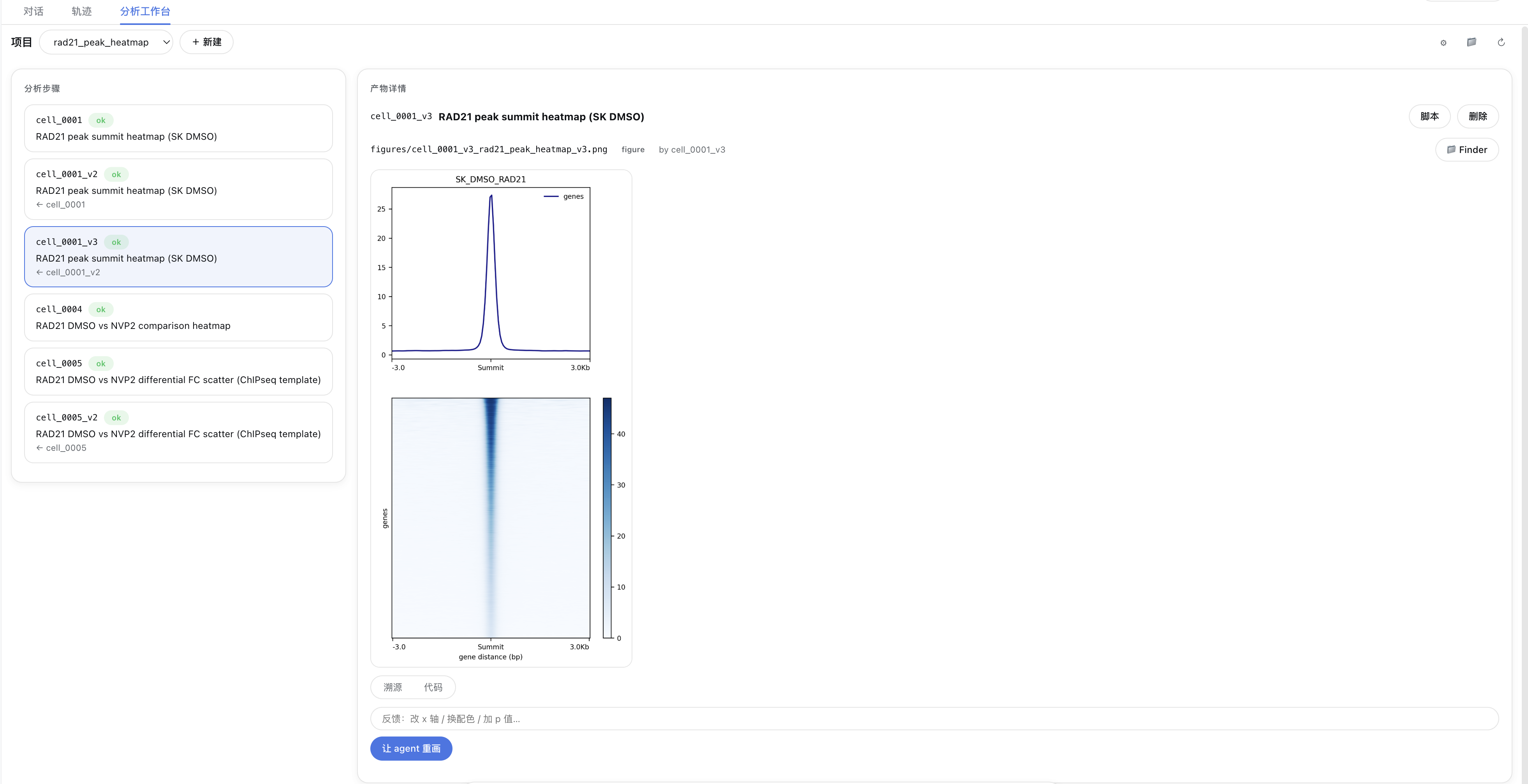
The feedback → redraw loop — every figure keeps its structured feedback history, and a one-click “让 agent 重画” (let the agent redraw) produces a derived version.
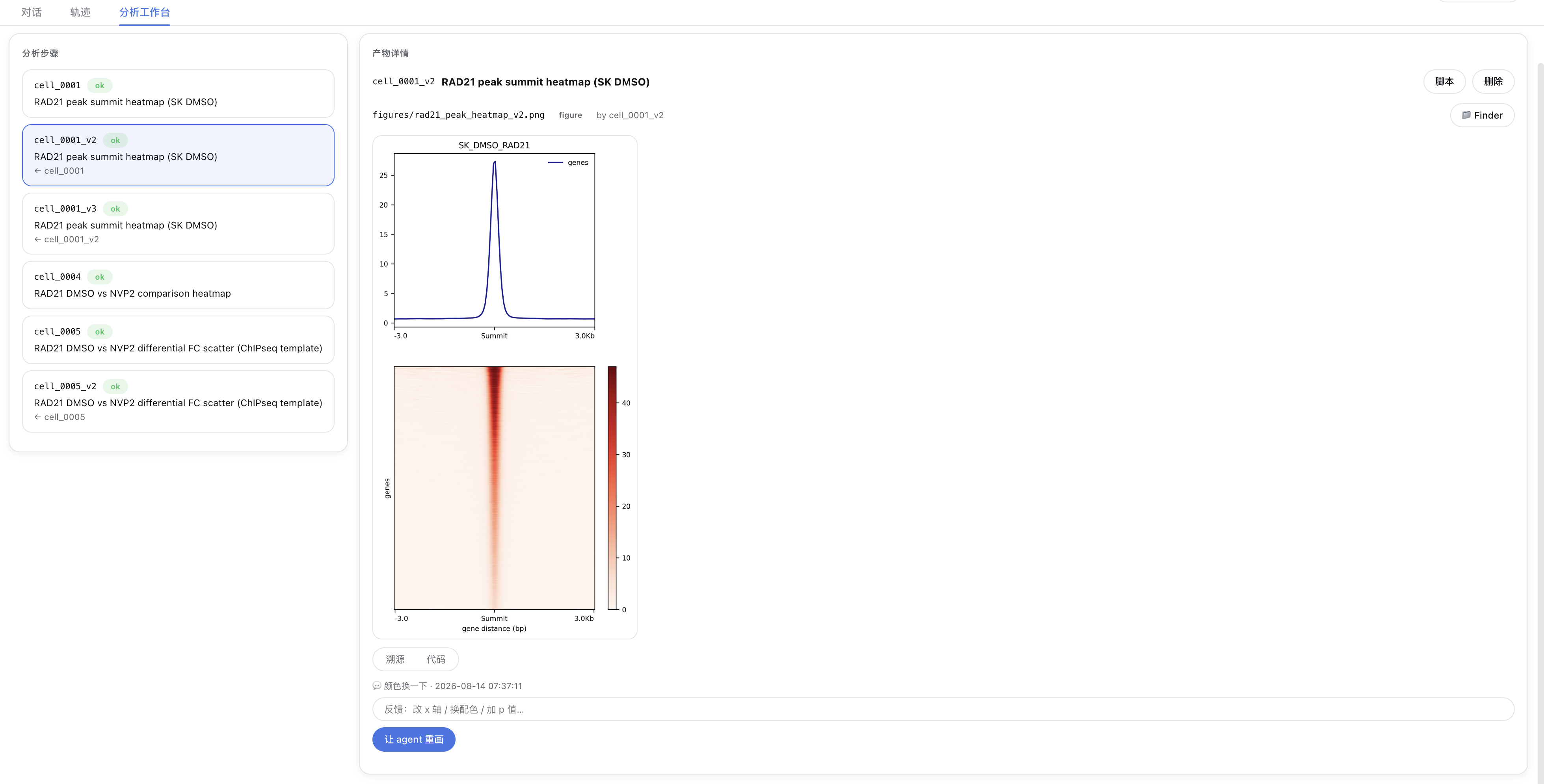
The workbench tab — a three-panel layout: the analysis steps list (with status and lineage cell_0001 → cell_0001_v2 → cell_0001_v3) on the left, and the artifact detail (inline figure + provenance / code tabs + script / delete / Finder actions) on the right.
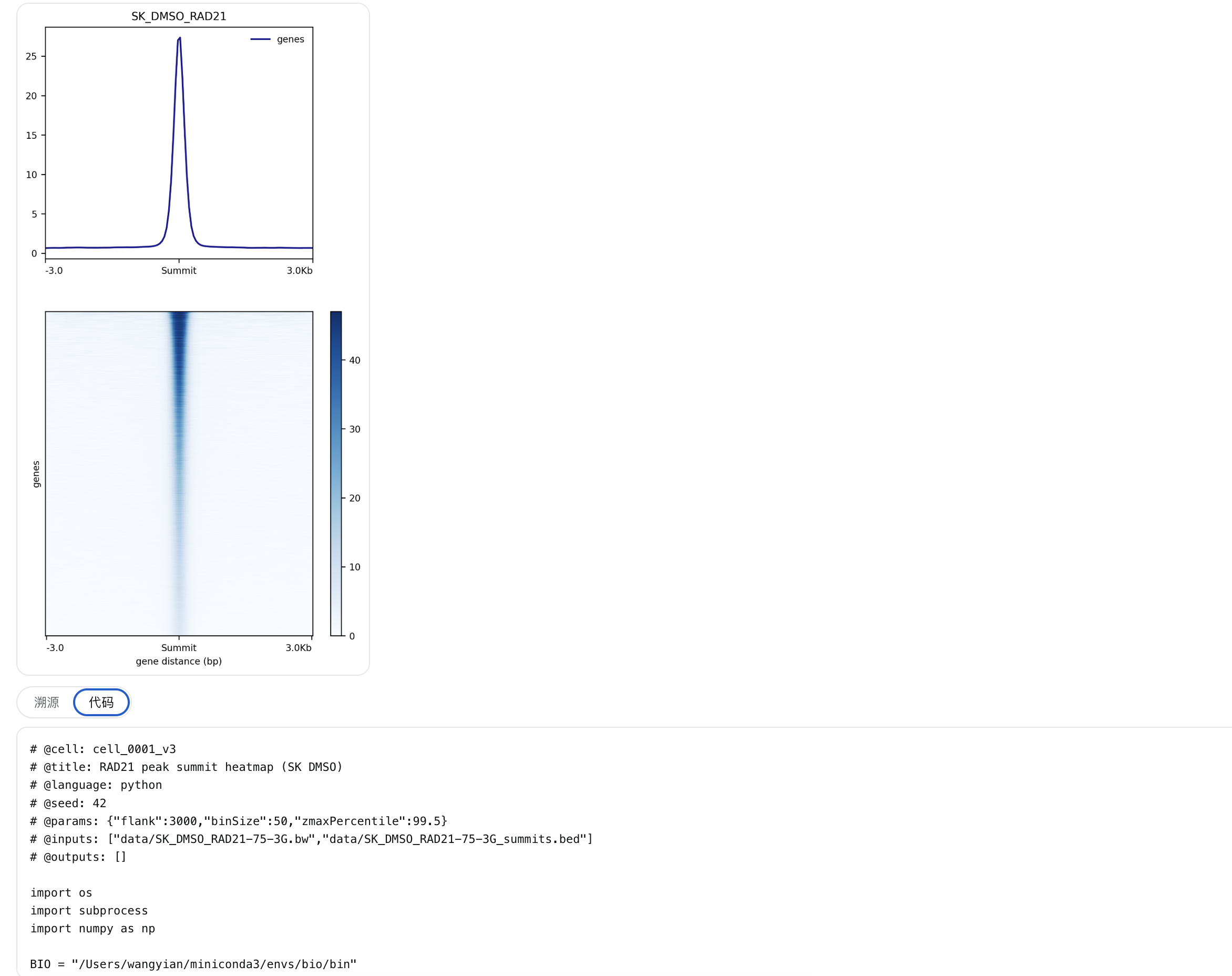
The code tab — every artifact’s generating script carries its declaration header (cell / title / language / seed / params / inputs), so it can be reviewed and reused at any time.
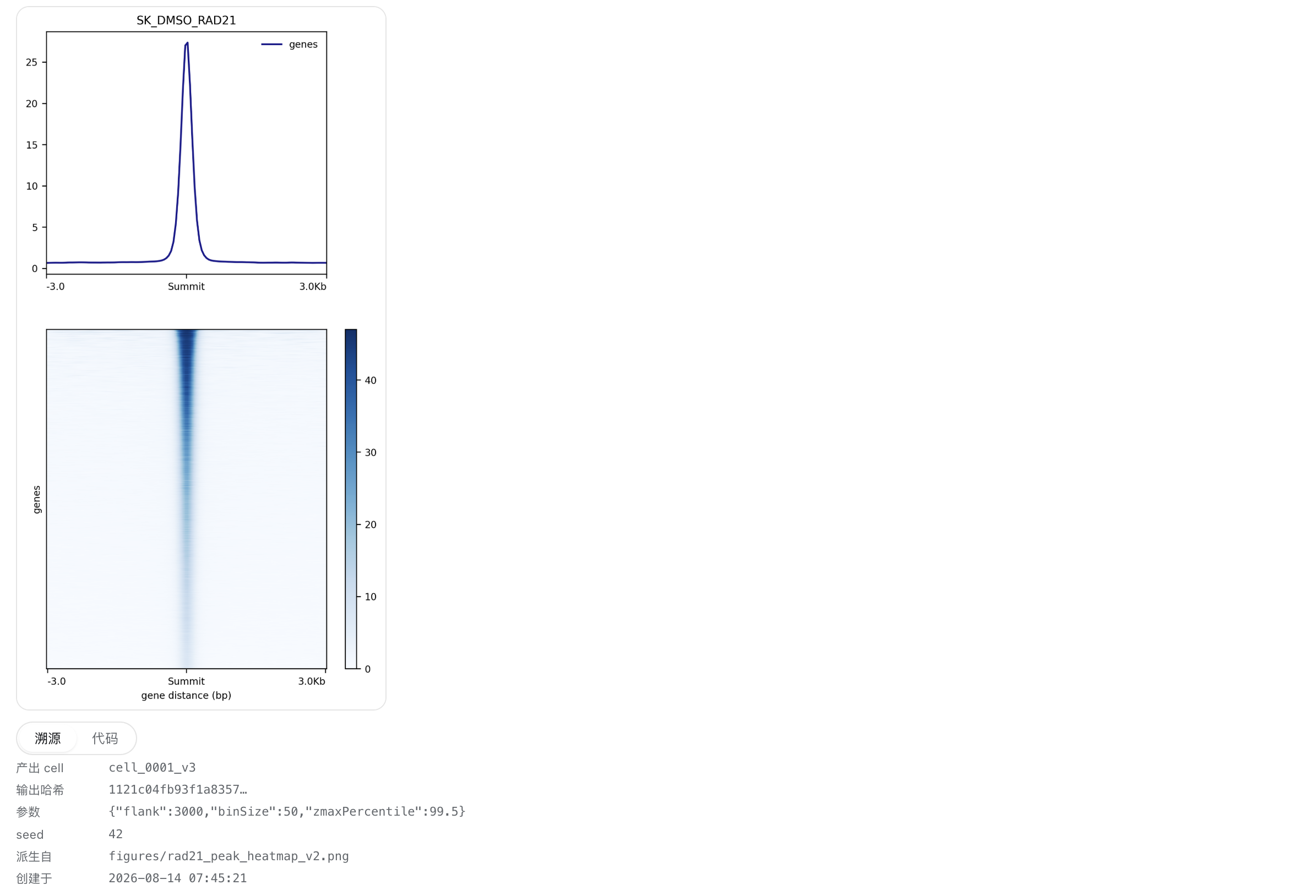
The provenance tab — full provenance: producing cell, output SHA-256 hash, params, seed, derived-from and created time.
📦 Install
dsh-science-workbench is a dual-face DSH plugin (Host + Client). Install it with the standard dsh plugin command — a thin pnpm forwarder that installs the package into a profile and automatically adds it to dsh.profile.bundles (because the package declares dsh.bundle.patch).
# From npm (published):
dsh plugin --profile web add dsh-science-workbench

# Local development (from a checkout):
dsh plugin --profile web add file:/path/to/dsh-science-workbench
Then restart dsh web. The bio_* tools become globally available, the workbench tab appears, and the plugin shows up under Settings → Plugins.
DSH desktop app
The desktop app owns its own desktop profile, which the dsh CLI refuses to write (profile "desktop" is managed exclusively by the Electron application). Install from inside the app instead:
- Open Plugins in the sidebar.
- Add plugin → paste the package name (
dsh-science-workbench) or the absolute path of a checkout (/path/to/dsh-science-workbench) → Install → Enable now. - Restart the app so the Host half loads (module hot-reload deliberately ignores
node_modules, so a linked checkout is not picked up while running).
Projects may live outside the app's session workspace — point the plugin at your own root with bio_set_projects_dir (e.g. ~/bio-projects); file writes are not fenced to the session workspace.
🚀 Quick start
After installing and restarting, just ask the agent in plain language:
“帮我用
demo_tss项目画一个 TSS 附近的信号热图。”
The agent will drive the tools for you. The equivalent manual flow is:
1. bio_init_project { name: "demo_tss" }
2. bio_run_cell { title: "TSS profile", code: "..." }   # writes figures/*.png
3. look at the inline figure → bio_add_feedback { artifactPath, text: "把配色改成 Blues" }
4. bio_rerun_cell { cellId: "cell_0001", editedCode: "..." }  # → cell_0001_v2 + new figure
Every step is committed to the project’s git history and recorded in manifest.json, so the whole lineage (cell_0001 → cell_0001_v2 → …) stays inspectable.
🧪 Reproducibility model
Each cell is a self-contained script with a declaration header:
# @cell: cell_0001
# @title: TSS profile
# @language: python
# @seed: 42
# @params: {"colorMap": "Blues"}
# @inputs: ["data/peaks.bed"]
# @outputs: []
It runs in a fresh subprocess with cwd = project root. On completion the Host:
- discovers figures written to
figures/and prefixes them with the cell id; - hashes every input and output (SHA-256) into the artifact record;
- appends the cell + artifacts to
manifest.jsonand updatesindex.md; - commits everything to the project’s local git repo.
📁 Project layout
<workspace>/bio-projects/<name>/
├─ manifest.json        # single source of truth: cells + artifacts + provenance + feedback
├─ environment.lock     # interpreter version + pip freeze snapshot
├─ index.md             # human-readable project index
├─ code/                # one self-contained script per cell (cell_0001.py, cell_0001_v2.py, …)
├─ data/                # input data
├─ figures/             # figures (cell-prefixed, e.g. cell_0001_tss_profile.png)
└─ .git/                # auto-created, auto-committed
🧩 Architecture
- Host (
lib/index.js) is the single source of truth. It registers thebio_*tools into the hosttoolsregistry, does all execution/provenance, and serves the/biowb/*data routes through thewebServerservice. - Client (
lib/client.js) is a pure projection — a hand-written browser bundle that reads/writes over same-originfetch('/biowb/<method>'). No typert Remote bridge and no harness monorepo build are required. - The convention skill (
skills/bio-workbench) teaches the agent the project layout, the cell contract and the feedback loop.
🌍 Cross-platform
| Operation | macOS / Linux | Windows |
|---|---|---|
| Shell | bash | PowerShell |
| Hash | shasum -a 256 | Get-FileHash |
| mkdir / move / delete | mkdir -p / mv / rm -f | New-Item / Move-Item / Remove-Item |
| Open in file manager | open / open -R | explorer.exe / explorer.exe /select, |
| Python | python3 | python |
🔧 Development
git clone https://github.com/poplarity/dsh-science-workbench
cd dsh-science-workbench

# lint (syntax check)
npm run lint

# install into your profile and restart
dsh plugin --profile web add file:$(pwd)
Structure: lib/index.js (Host) · lib/client.js (Client bundle) · index.js (entry re-export) · cordis.patch.yml (bundle patch) · skills/ (convention skill) · docs/ (design doc) · examples/ (example project).


